Helpful Tips About Tax Preparation
📅 2026 Update: What Is New in Tax Preparation
This section was added in October 2026. The tips in the original article still apply. This update adds the rule changes you need to prepare for. The original article follows below, unchanged.
📜 A major new tax law
The One, Big, Beautiful Bill Act was signed July 4, 2025. The IRS made more than 100 changes to its programs, forms, and instructions for the 2026 filing season. That makes preparation more important than usual.
🆕 The new Schedule 1-A
Four new deductions apply for tax years 2025 through 2028. They go on a new form, Schedule 1-A.
- 💵 Tips: up to $25,000.
- ⏱️ Overtime: up to $12,500 of the premium portion ($25,000 joint).
- 🚗 Car loan interest: up to $10,000 for a new qualified vehicle.
- 👵 Seniors: an extra $6,000 per person 65 or older.
Each has income limits and needs a Social Security number.
📊 Updated numbers to know
- 🧾 Standard deduction for 2025: $15,750 single, $31,500 joint, $23,625 head of household.
- 👶 Child tax credit: $2,200 per qualifying child for 2025.
- 🏠 SALT deduction cap: $40,000 for 2025, reduced for incomes above $500,000.
📨 Changes to 1099 forms
Payment apps like PayPal and Venmo send a Form 1099-K only if you received more than $20,000 and more than 200 transactions. That is the old threshold, restored in 2025.
If you pay contractors, the filing threshold for Forms 1099-NEC and 1099-MISC rises from $600 to $2,000 for payments made in 2026.
🏦 Refunds go to accounts now
Paper refund checks began phasing out September 30, 2025. Have your routing and account numbers ready when you prepare your return.
🏢 Less in-person IRS help
The IRS had fewer staff in 2026. A Taxpayer Advocate report found the number of fully staffed walk-in Taxpayer Assistance Centers fell to 42, down from 102 the year before. Plan on online tools first.
💡 Practical Tips for a Smooth 2026 Tax Season
These tips are general information, not legal or tax advice. A licensed tax professional can review your situation.
📁 Use a checklist
Before you start, gather:
- W-2s from every employer
- 1099s for freelance work, interest, dividends, and stock sales
- 1098 for mortgage interest and 1098-T for tuition
- Last year's return, for your prior-year AGI
- Bank routing and account numbers for your refund
🔍 Check pay stubs for tips and overtime
Employers got penalty relief for reporting tips and overtime separately on 2025 W-2s. Your W-2 may not show the amounts you need for Schedule 1-A. Your final pay stub of the year often does.
🧑💻 Use your IRS Online Account
Taxpayers logged in to IRS Online Accounts nearly 121 million times in the 2026 season. You can see payments made, view some tax forms the IRS received, and get refund updates there.
🗂️ Keep records for three years
Keep returns and supporting records for at least three years. Keep them longer for property, investments, and if you left income off a return.
🛡️ Get an Identity Protection PIN
An IP PIN is a six-digit number that blocks others from filing a return in your name. Anyone who can verify their identity can request one through their IRS Online Account. Identity theft cases took about 600 days to resolve in fiscal 2026.
⏰ Do not wait for April
Filing early lowers the chance that a thief files first with your Social Security number. It also gives you time to fix problems.
🗂️ What to Gather Before You Start
- 🪪 Social Security numbers for you, your spouse, and every dependent.
- 📄 All W-2s, 1099s, and 1098s you received.
- 🧾 Last year's return, for your prior-year AGI and carryovers.
- 🏦 Bank routing and account numbers for direct deposit.
- 🔐 Your Identity Protection PIN, if you have one.
- 👶 Childcare provider names, addresses, and tax ID numbers.
- 💵 Records of tips, overtime pay, and car loan interest, if you plan to claim the new deductions.
- 🏠 Property tax, mortgage interest, and charity receipts, if you itemize.
🏆 Tax Preparation Help, Ranked by User Reviews (2026)
Some people prepare their own return. Others want a professional or a safety net. The list below ranks both kinds of help by public Trustpilot data checked in October 2026. Scores change over time.
This is not a recommendation. Review samples differ, and some companies invite reviews. Read each note.
🥇 1. TaxSlayer
TaxSlayer has been rated 4.2 out of 5 on Trustpilot across roughly 31,000 reviews.
It has been known for affordable software with a self-employed tier that includes tax-pro access. Reviewers praise easy import of prior-year data. Complaints focus on state fees.
🥈 2. Keeper
Keeper has been rated 4.8 out of 5 on Trustpilot across about 320 reviews. The company pays for a Trustpilot subscription and invites reviews.
It has been known for year-round expense tracking for freelancers, with every return reviewed and signed by an in-house tax pro. Some reviewers find it limited for very complex returns.
🥉 3. TaxAudit
TaxAudit has been rated 4.8 out of 5 on Trustpilot across roughly 1,800 reviews. It does not prepare returns.
It has been known for audit defense memberships, often sold as an add-on, and representation if the IRS or a state questions your return. It is not a law firm.
4. Taxfyle
Taxfyle has been rated about 3.2 out of 5 on Trustpilot across roughly 80 reviews. It connects you with a licensed preparer online. Reviews are mixed on speed and communication.
5. Jackson Hewitt
Jackson Hewitt has been rated 2.9 out of 5 on Trustpilot across about 260 reviews. Reviews split almost evenly between five stars and one star.
It has been known for walk-in preparers, many inside Walmart stores. Praise centers on individual preparers. Complaints focus on fees.
6. H&R Block
H&R Block has been rated 1.3 out of 5 on Trustpilot across roughly 1,400 reviews. Its strength is the largest network of physical tax offices in the country.
🆓 Free option: VITA and TCE
IRS-certified volunteers prepare returns for free through VITA and TCE for many people with moderate incomes, disabilities, limited English, or who are 60 and older. Search "VITA locator" on IRS.gov.
🔎 How to Compare Filing Options
Star ratings are only one signal. Before you pick, check these points:
- 💲 Total price. Look at the final price for federal plus state, not the starting price. Many products charge more for self-employment, investments, or rental income.
- 🧾 Forms you need. Make sure your forms are included at the tier you choose. Schedule C, Schedule E, and the new Schedule 1-A are common upgrade triggers.
- 📥 Import tools. Importing last year's return and your W-2 saves time and cuts typing errors.
- 🧑💼 Human help. Some products include chat or phone help. Others charge for it. Decide if you will want it before you start.
- 🛡️ Audit support. Some products include help answering IRS letters. Others sell it as an add-on.
- 💾 Access to past returns. Check how long you can download your old returns.
⚠️ Red Flags
- 🚩 A "free" label that disappears once you enter your income details.
- 🚩 Refund advance or refund transfer offers that take fees out of your refund.
- 🚩 Pressure to buy add-ons before you see your final numbers.
- 🚩 Any preparer who will not sign the return or give you a copy. Paid preparers must sign and include their PTIN.
❓ Frequently Asked Questions
What is Schedule 1-A?
A new IRS form for 2025 returns. It is where you claim the deductions for tips, overtime, car loan interest, and seniors.
Will I get a 1099-K for selling things on an app?
Only if you received more than $20,000 and more than 200 transactions through that platform in the year. You still must report taxable income even without a form.
What is an Identity Protection PIN?
A six-digit number from the IRS that must be on your return. It prevents someone else from filing using your Social Security number.
Do I need a professional this year?
Not always. Many W-2 filers do fine with software. Consider help if you are self-employed, have tips or overtime, own rental property, or itemize.
How long should I keep my tax records?
Generally at least three years. Longer for property and investment records.
Can I prepare my own return?
Yes. Most people with W-2 income can file with software or IRS Free File. More complex returns may benefit from a professional.
How do I get more time to file?
File Form 4868 by April 15 to get until October 15. It extends the time to file, not the time to pay. Pay what you expect to owe by April 15 to limit interest and penalties.
ℹ️ Disclosure
LAWS.com may receive compensation when readers use links to some of the services listed on this page. Compensation does not affect the order of the list above. Rankings are based on public user review data as of the date shown. This article is general information and is not legal, tax, or financial advice.
End of October 2026 Update
Introduction
Tax preparation is the process of calculating and filing taxes. While the task can seem daunting, there are helpful tips that can make tax preparation easier and less stressful.
Organize Your Documents
Before beginning the process of tax preparation, it's important to have all your necessary documents organized. This includes W-2s, 1099s, income statements, and receipts for any deductions. Keep them in one place, like a folder or binder, so you don't have to spend hours searching for them later.
Understand Tax Changes
Tax laws can change every year. It is important to stay up to date on any changes that may be in effect when preparing your taxes. Keep an eye out for any new tax credits or deductions, and be aware of changes in taxable income brackets.
Consider Hiring a Professional
Tax preparation can be complex and time-consuming. Consider hiring a professional tax preparer. They can offer peace of mind and ensure you are maximizing your tax benefits while avoiding making errors that could lead to audits or penalties.
Take Advantage of Deductions
It's important to take advantage of any deductions you are eligible for. This includes deductions for charitable donations, medical expenses, and education. Keep receipts and documentation to support your deductions in case you are audited later.
File Electronically
Filing electronically is quicker and easier than filing by mail. It can also increase your accuracy, and you will receive your refund faster. The IRS offers a free electronic filing system for taxpayers to use.
Pay Your Taxes on Time
If you owe taxes, it's important to pay them on time to avoid penalties and interest. The IRS provides various payment options, including online payments, automatic withdrawals, and payment plans.
Conclusion
Tax preparation may seem overwhelming, but with these helpful tips, you can make the process easier. Stay organized, understand tax changes, consider hiring a professional, take advantage of deductions, file electronically, and pay your taxes on time. By following these guidelines, you can ensure that your taxes are filed correctly and on time.
What is Tax Preparation?
Tax preparation refers to the process of preparing and finalizing your tax returns, specifically your income tax returns. That being said, the act of preparing one’s taxes typically denotes a relationship where a professional streamlines another individual’s tax return in exchange for compensation. Tax preparation, through this definition, may be accomplished by the taxpayer with or without the help of tax preparation software or online services. Furthermore, tax preparation may also be accomplished by a licensed or legal professional such as an attorney, a public accountant, or by an unlicensed tax preparation company.
Tax preparation is a service with an unyielding demand as a result of the United States’ complicated tax laws; nearly 53% of individual tax returns in 2010 were filed by a paid tax preparation service.
About half of the states in America impose laws and licensing requirements for any individual or entity who prepares tax returns for compensation. Although the majority of tax preparation services and individuals require a fee for their services, some of these entities incorporate a fee-based model for the filing of state tax returns only.
Individuals who have uncomplicated tax returns or who contain and Adjusted Gross Income of under $58,000 may seek tax preparation without incurring a fee by contacting the Free File Alliance agency. Furthermore, those individuals who earn over $58,000 per year can access a Free File Fillable Form, which is an electronic version of the IRS paper forms. Both of these tax preparation services are only accessible by visiting the Internal Revenue Service’s website located at www.irs.gov.
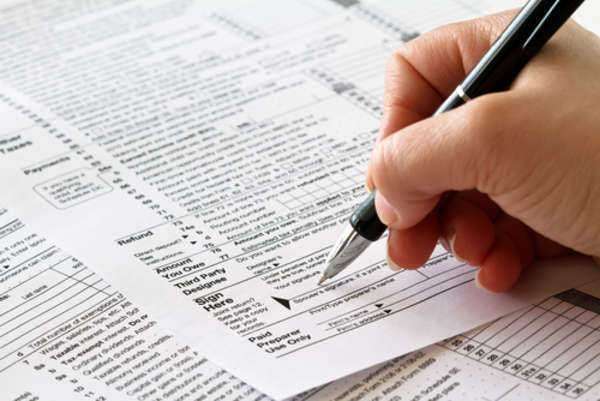
The Internal Revenue Service is working on a proposed change that would eventually require a formal registration of all paid federal tax preparation services and tax preparers. Although licensing requirements currently do not exist, the proposed rules would require that tax preparation services and those individuals who comprise the companies to pass a national tax law exam and undergo graduate-level requirements.
Individuals who are certified public accountants, legal professionals or enrolled agents are required to register with an appropriate agency, but are not required to take the proposed exam and are not subjected to continuing educational requirements. To maintain their licenses, an accountant or a legal professional are; however, subject to enrolling in continuing education requirements that imposed on a state-by-state basis.
The proposed rules of the IRS define a “tax preparation service or individual” as an entity or individual who, for compensation, prepares all of or a substantial amount of the individuals federal tax return or claim for a refund.
Tax preparation services that hire public accountants or legal professionals to facilitate an individual’s tax return are required to obtain a practitioner tax identification number. This regulation was instituted to the IRS and affirmed for any tax preparation service that is utilized after the date of December 31, 2010.
Beginning in May of 2011, all tax return preparation services and individuals will be required to pass competency tests to officially become registered tax return preparers. All tax return preparers must undergo continuing educations requirement of 15 hours per year; as of September of 2010, the Internal Revenue Service has yet to decide on a beginning date for such a requirement.